
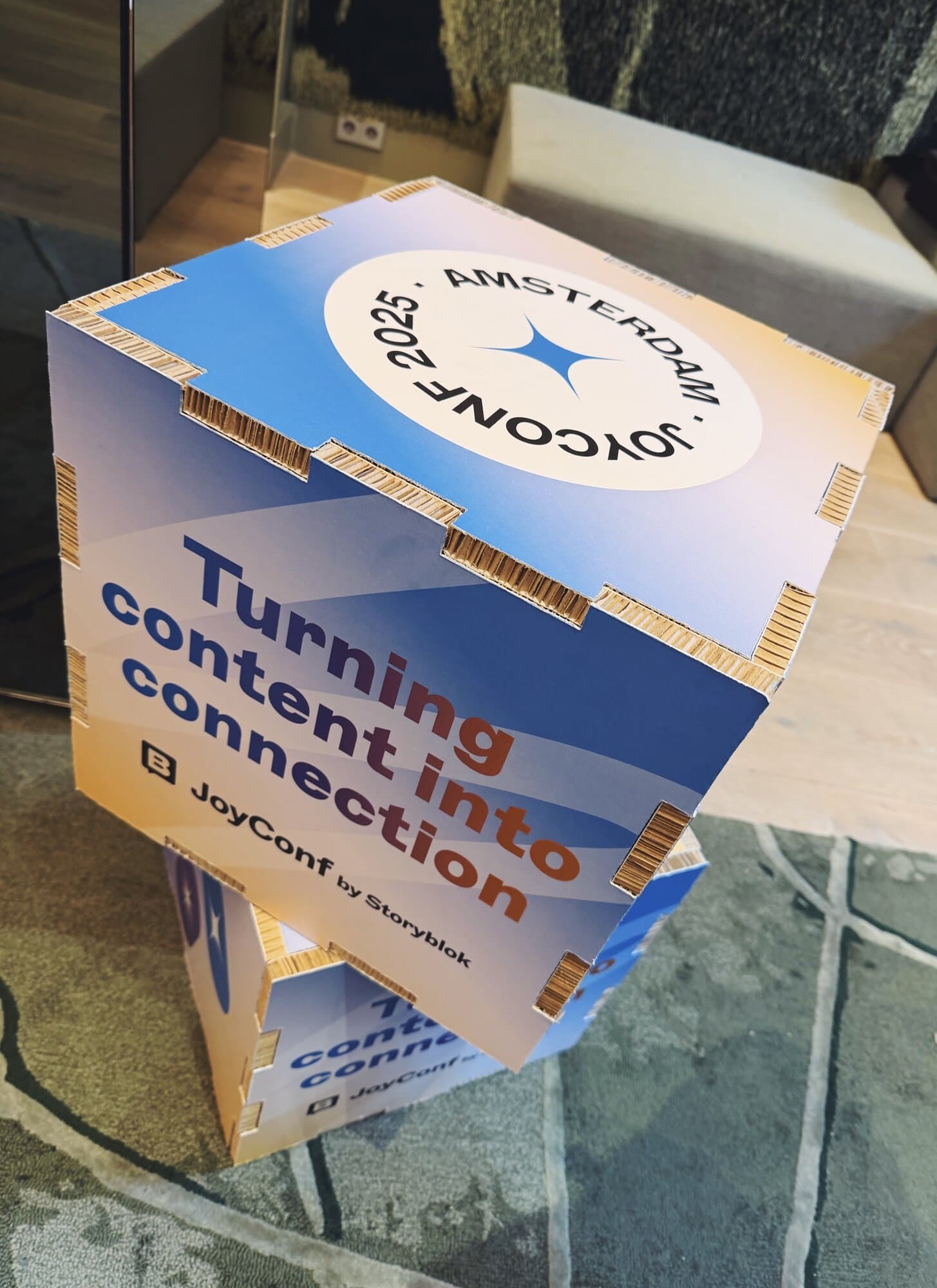
In October we went to JoyConf 2025, Storyblok's first conference, in Amsterdam. We expected a product conference: roadmap updates, feature announcements, the usual rhythm of a vendor event. We left thinking about something less obvious. Across talks on AI search, Agent Experience, ecommerce and localization, the same idea kept surfacing. The CMS is no longer just where you publish content. It's becoming the infrastructure that decides how well your content can be found, reused, translated and understood, by people and increasingly by machines. That shift was always coming, but the consequences of getting it wrong are now far more visible.
JoyConf ran over two days at Felix Meritis, bringing together developers, marketers, content teams and technology partners. The talks covered AI search, Agent Experience, localization, ecommerce, performance, content operations and Storyblok's roadmap. The topics varied, but the same question kept coming up: what does content need to do now? Content now has to work harder, travel further and make sense to more than human visitors.
We've been moving away from treating WordPress as the default for new builds, and Storyblok has become increasingly central to how we think about modern website projects. So we split our time across the technical track, the marketing and content sessions, and the main-stage talks. We weren't there as a large enterprise team with a sprawling content estate. We were there as a small studio trying to make better decisions about the systems we recommend to clients, which made the conference interesting in a slightly different way. A lot of the talks were aimed at larger teams, but the problems behind them felt familiar: messy content, slow publishing, unclear ownership, awkward migrations and websites that are expected to do more than they were built for. What stayed with us was the bigger shift: the role of the CMS is changing, and that the structure behind your content is becoming a practical concern rather than a technical preference.
The CMS is becoming more than a publishing tool
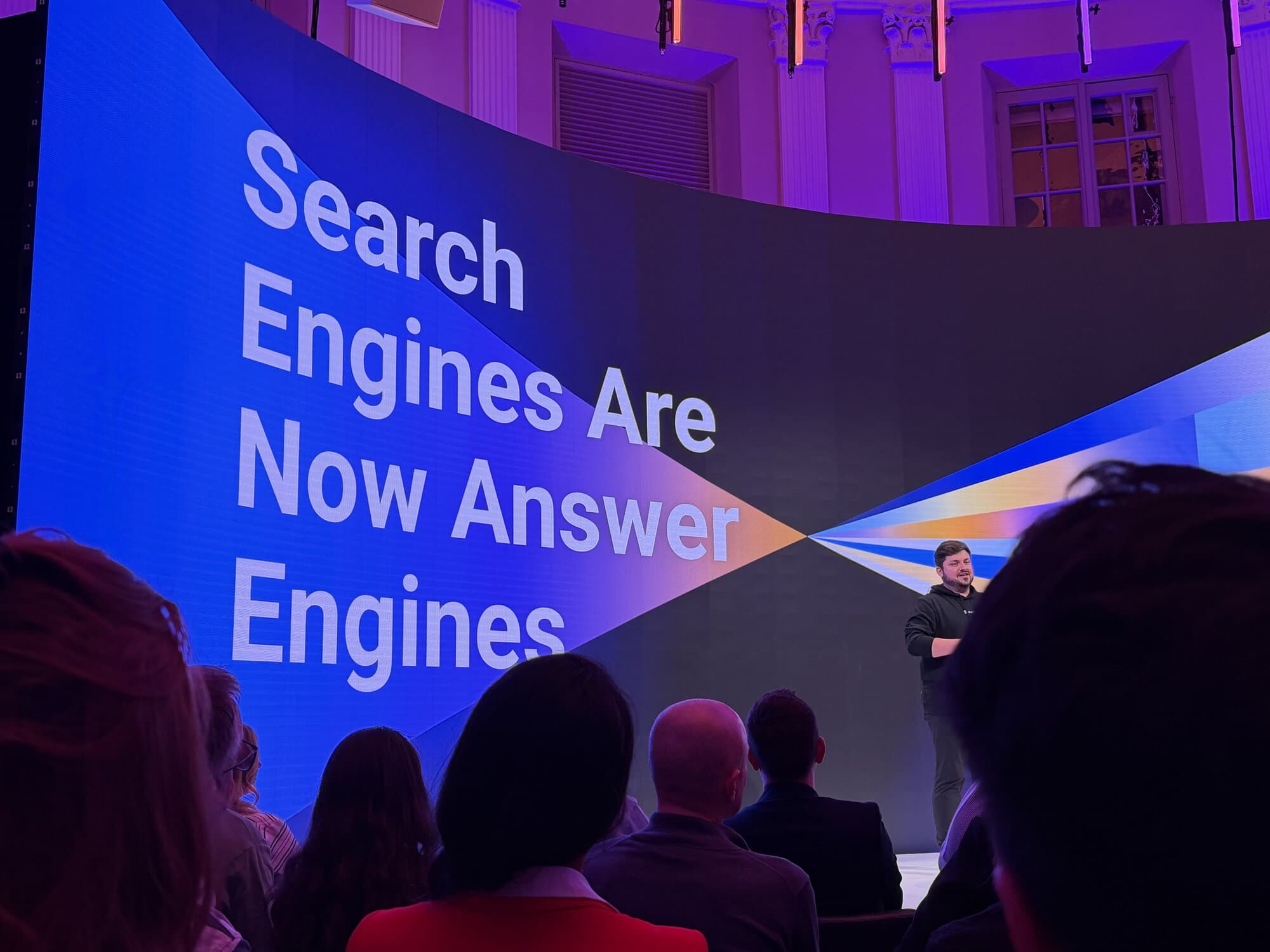
Dominik Angerer, CEO and co-founder of Storyblok, opened the conference with a clear framing: the front door to the web has moved from search results to AI answers. Content now has to work for humans and machines at the same time. He positioned Storyblok's next chapter around creation, governance, delivery, content intelligence and AI readiness, and described the CMS as moving toward a content system for the AI era.
That framing connects directly to why structure matters. If your content is messy, duplicated, inconsistent or trapped inside page layouts, it becomes harder to reuse, automate, localize and interpret. Angerer made this point bluntly in Storyblok's announcement, saying that unmanaged content debt is now backfiring, because outdated or irrelevant content can be picked up as a source of truth in AI answers and misrepresent a brand.
Storyblok used the keynote to announce several features and partnerships:
Strata, announced as a vector data layer for semantic content intelligence and early access in 2026.
FlowMotion, announced as an automation and orchestration layer for content workflows, powered by n8n, and since released.
Partnerships with Netlify for content hosting and delivery, and OtterlyAI for measuring content visibility in AI search.
Operational tools including the Enterprise Content Planner, Global Asset Library, Environment Spaces, Figma Connect and React Native Live.
The same point kept surfacing. For us, it reinforced something we already see in client work. The CMS decision is not only about where editors log in. It shapes how well content can be structured, governed, reused, localized, tested and understood later.
AX was the talk that gave the shift a name
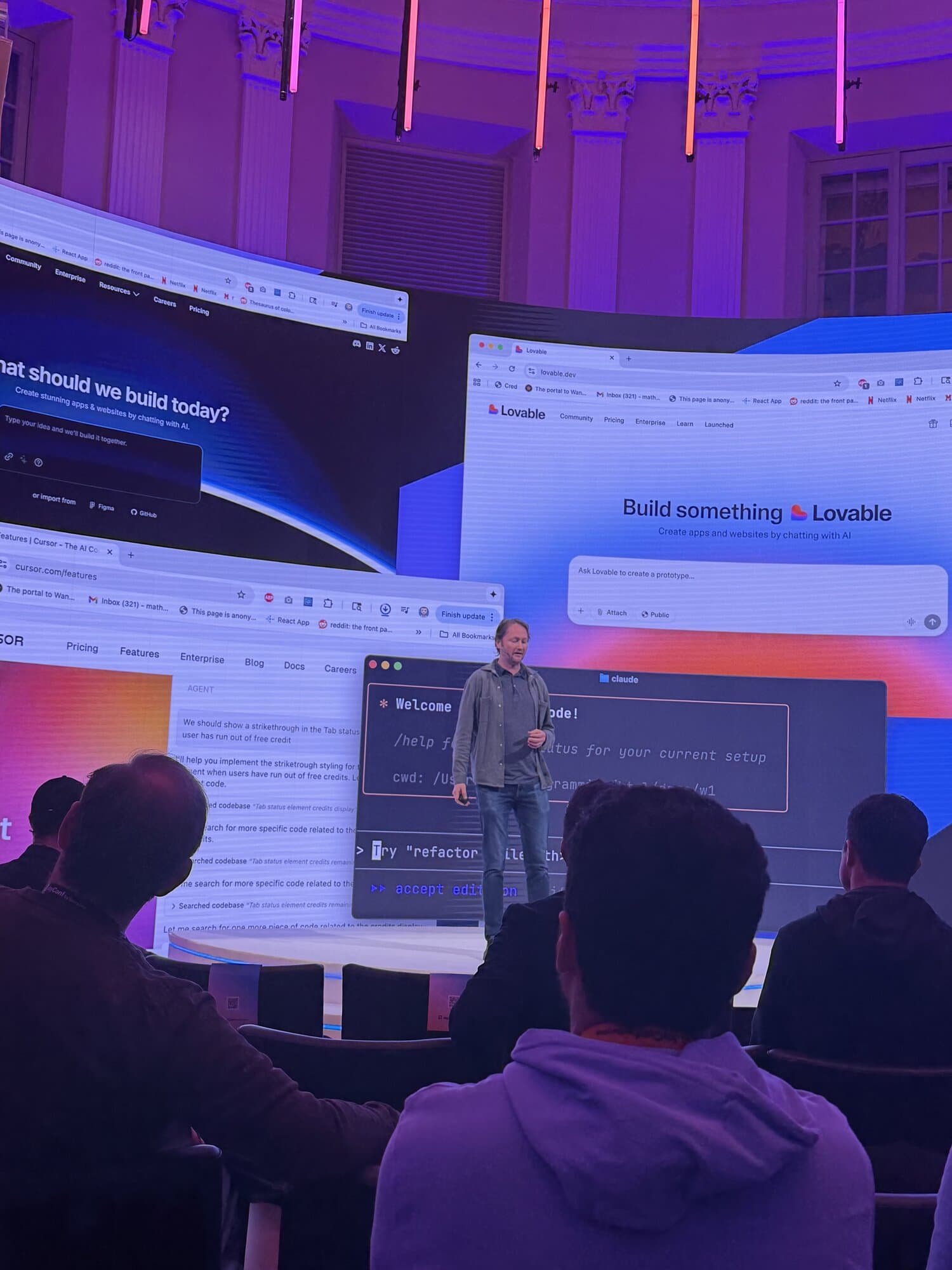
The session that stuck with us most was Matt Biilmann's keynote on day two: "From Fast Front-Ends to Intelligent Front-Lines: Becoming Agent-Ready in the Era of Agent Experience (AX)." Biilmann is the CEO and co-founder of Netlify, and he coined the term AX.
The next visitor to your site might not be human. It could be an autonomous agent researching a topic, summarizing options, writing or taking an action on someone's behalf. AX is the experience those agents have when they try to understand and use a product, website or platform. Think UX, but for agents.
Biilmann places AX alongside two ideas most teams already know. UX considers the human user. DX considers the developer. AX considers the agent. In his writing, he defines AX as "the holistic experience AI agents will have as the user of a product or platform." He's also been clear that AX means Agent Experience, not Agentic Experience, on the reasoning that we don't talk about "Useric Experience" or "Developerish Experience," so we shouldn't invent an awkward variant here either.
Biilmann breaks AX down into four areas worth thinking about: access (can the agent reach your product, and with the right permissions), context (does the model actually know about your product and have what it needs to use it), tools (are you giving agents the right ways to act), and orchestration (can you trigger and manage agent work). At JoyConf, he connected this to Storyblok through structured, block-based content, real-time context, and emerging standards like llms.txt, agents.json and the Model Context Protocol (MCP).
AX was useful because it gave language to something many teams are already bumping into. Their content is no longer only read in a browser. It's being interpreted, extracted, summarized and acted on elsewhere. That makes content structure a practical concern, not a nice-to-have.
AI search makes content health visible
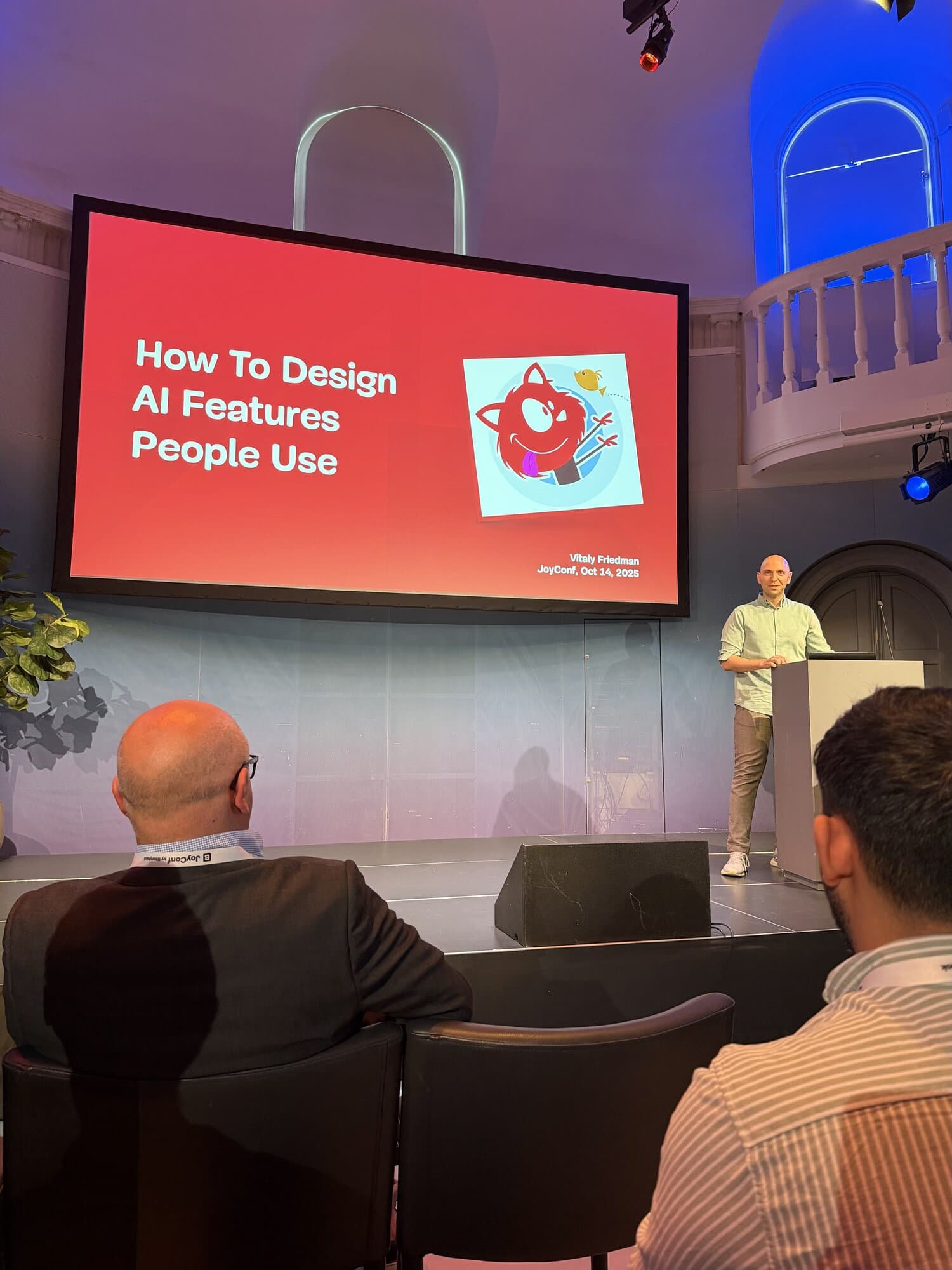
A few sessions on the marketing track circled the same point from a different angle. Thomas Peham, CEO of OtterlyAI, gave a talk called "The State of AI Search in 2025: How to Get Found in an AI-First World." Storyblok's SEO manager, Arthur Mstoyan, covered the same theme from a marketer and SEO perspective in a later session, "AI Search is Here: What It Means for Marketers, SEO, and Content." There was also a journalist panel, "Inside the Newsroom," covering content lessons from the people who report on this for a living.
The themes were consistent: generative engine optimization, the shift from ranking to being referenced, retrieval optimization, and the idea of AI agents as a genuine audience. One practical point worth repeating carefully is that content needs to be accessible to crawlers and retrieval systems, not hidden behind avoidable technical barriers. That's less about chasing algorithms and more about not getting in your own way.
Storyblok's own material frames this well. AI search tends to expose weaknesses that were already there: inconsistent terminology, outdated claims, duplicate pages and missing metadata. AI search is exposing content health problems that SEO dashboards have not always made obvious. Structured content, reusable components, clear ownership and regular review cycles all make a brand easier for AI systems to interpret accurately.
The practical takeaway is not "write for robots." It's to make content clearer, more consistent and easier to understand. That helps people first. It also gives search engines and AI systems a better chance of representing the brand correctly.
The AWS session made AX feel more commercially concrete
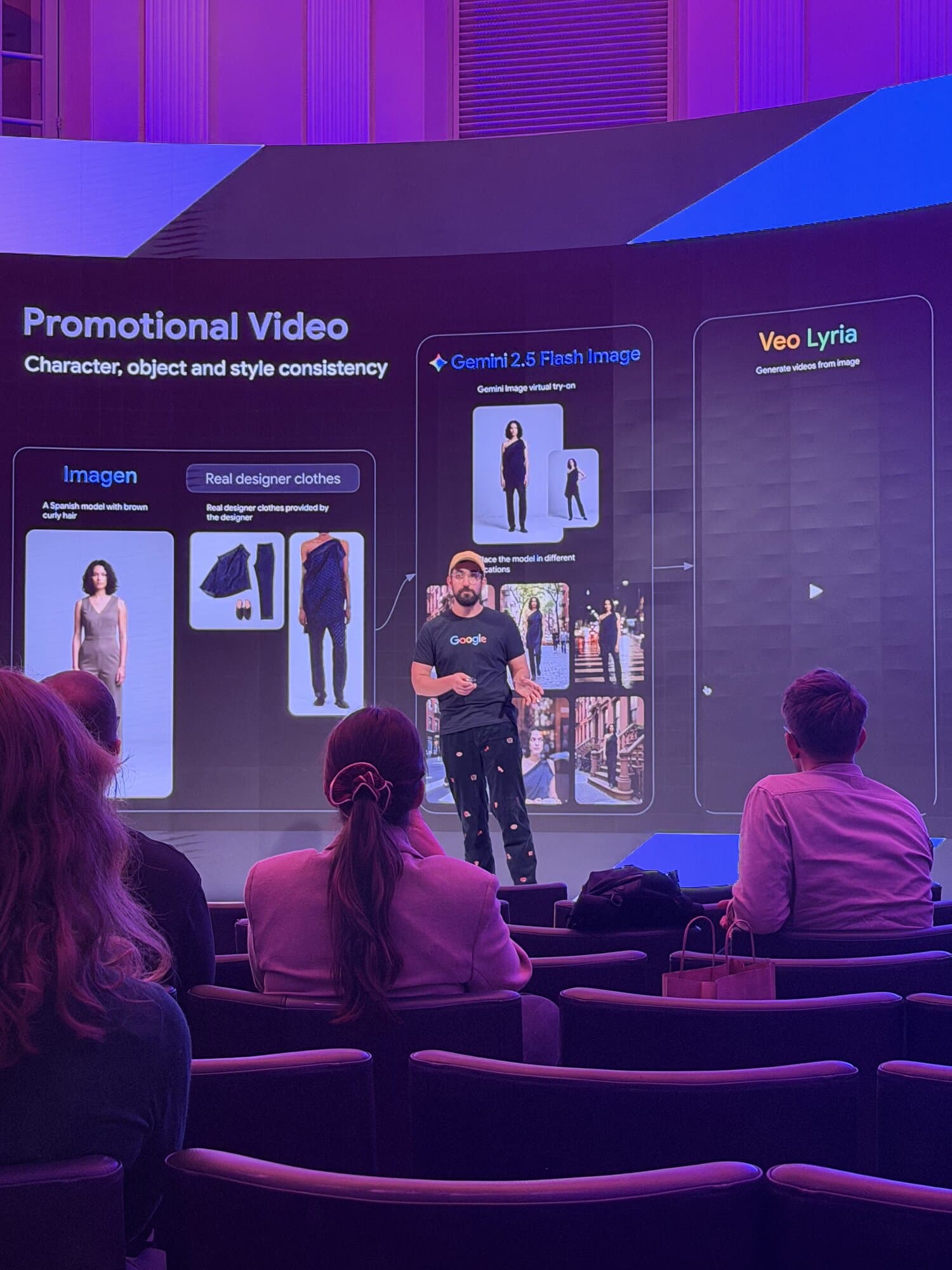
If AX risked sounding like an infrastructure idea for developers, the AWS session made AX feel more commercially concrete. Marcel Visser and Nelson Galindo from AWS gave a talk called "Retail: Reimagined," looking at AI's impact on retail and consumer experiences.
Their framing described three waves: basic personalization, predictive anticipation, and autonomous agentic commerce, where AI assistants execute complex, multi-platform transactions. They walked through how this could affect pricing, advertising, product discovery, brand loyalty and customer acquisition, and they introduced Agent Experience as part of future digital commerce infrastructure.
This was where the agent conversation started to feel less abstract. If an AI agent is helping someone compare products, filter options or make a purchase, then product content has to be more than persuasive copy on a page. It has to be structured, accurate, consistent and available in ways both people and systems can read.
We'd be careful not to overstate it. The talk did not claim agents will replace every ecommerce journey, or that brand loyalty is dead. The more honest reading is that it raised real questions about how brand, product information and customer experience might change once agents become part of the buying process.
Localization brought the conversation back to day-to-day content work
For all the future-facing talks, two localization sessions were a useful reminder that content infrastructure is also about everyday operational pressure.
Danielle van Zuijlen and Michiel van der Ros from TomTom gave a talk on navigating localization during a company pivot. TomTom moved from a monolithic CMS to Storyblok, and the session was candid about the messy parts: translation mismatches, "vibe translating," the line between cheap machine translation and properly checked quality, and the exceptions that had to be handled in code, such as centralized localized banners.
The useful point is not that Storyblok removes localization complexity. Nothing does. It's that a structured, headless setup gives teams a better foundation to manage it.
There was also a Lokalise session, "From Manual to Automagical," on building a more autonomous localization workflow for development teams. Different angle, same underlying theme. Keeping content consistent across markets is less about heroics and more about giving teams clear workflows, knowing what can be machine-translated, knowing what needs a human, and handling exceptions without turning the CMS into a mess.
Performance and migration are still part of the same story
The developer track kept the conference honest about delivery. Harry Roberts gave a talk called "How to Think Like a Performance Engineer," focused on purposeful, realistic and repeatable performance testing. That connects to something we see often: performance gets written into requirements at the start, then rarely monitored properly after launch.
Philipp Dollst from LichtBlick SE shared a talk on spontaneous CMS migrations, describing a fast, scrappy move to Storyblok after a steep renewal price hike from their existing provider. He went from first contact to production in 18 days. It's a good story, but the real lesson sits behind it. Unplanned migration is painful, and waiting until your current platform becomes a problem removes most of your options.
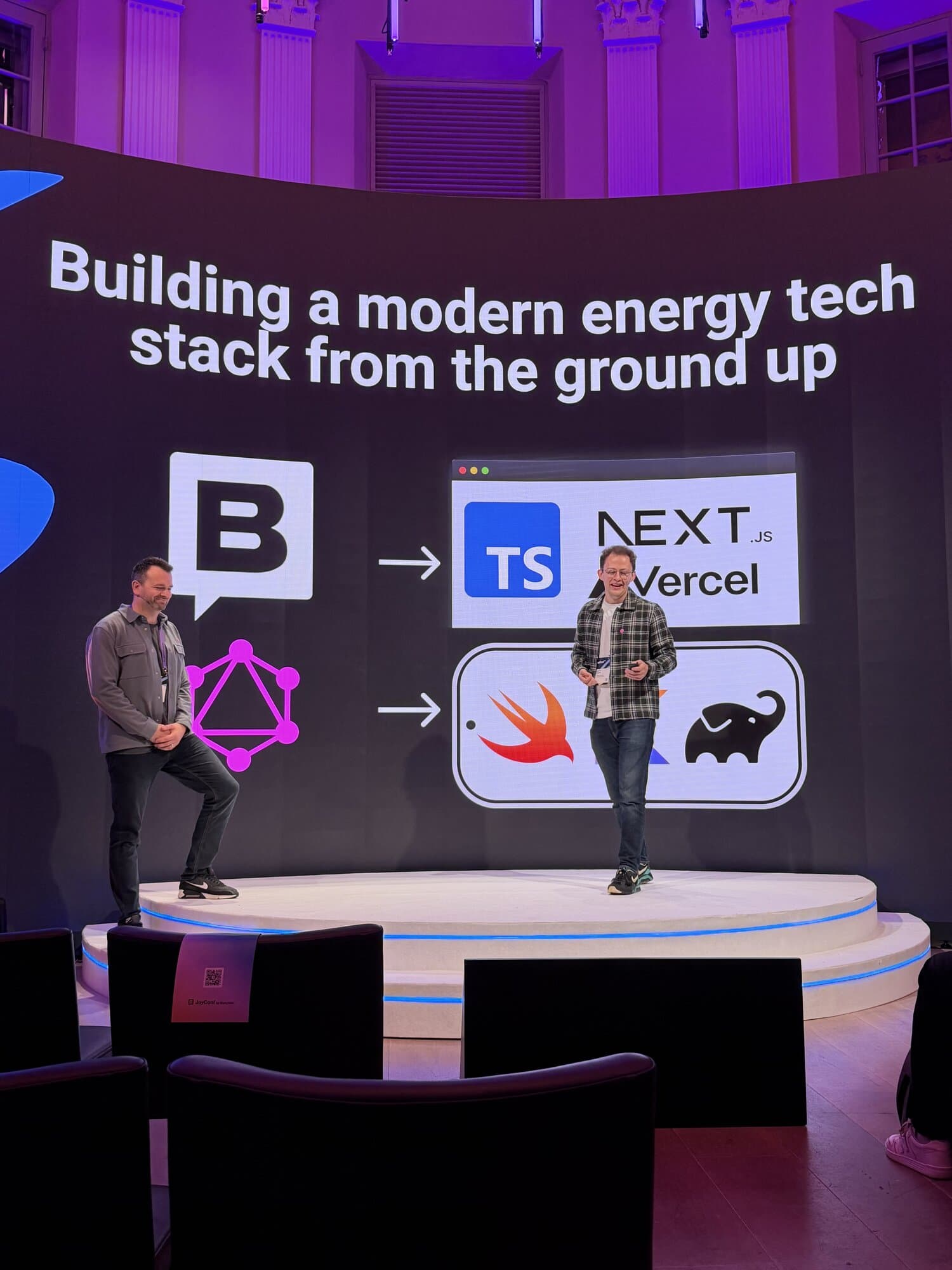
Edoardo Dusi's "Frictionless Frontend" session connected Storyblok, Next.js and Netlify, and was honest about the gap between the ideal headless workflow and the real production details around deployment, security and preview. That gap is where a lot of projects quietly lose time.
This is where the conference connected directly to how we build. All the AI and content strategy talk only matters if the site underneath is properly built: sensible front-end architecture, reliable preview, realistic performance testing and CMS structures that don't fall apart under real content.

What this confirmed for Hekla
None of this changed our direction so much as sharpened it. We've been moving away from treating WordPress as the automatic choice for new builds. WordPress is still a strong option for plenty of sites. But for teams that need more structured content, stronger performance and cleaner workflows across channels, it can start to become a limiting foundation.
Storyblok with a modern front-end gives more room to build the site properly, rather than fighting the CMS. The benefit is not only developer preference. It's a better editing experience for content teams, more structured content for marketers to work with, and a stronger base for AI search, localization, ecommerce, performance and whatever channel comes next.
Headless can sound like an enterprise-only conversation. A lot of what we heard at JoyConf does apply to large organizations. But the underlying problems show up in smaller teams too: messy content, slow updates, unclear ownership, inconsistent messaging, poor performance and a lack of flexibility.
The point is not that every client needs the most complex architecture. Most do not, and we'd usually advise against it. The point is that even smaller teams benefit from content that's structured properly, easy to manage, and ready to move beyond a single website template.
Better content needs better foundations
JoyConf made some of the bigger AI conversations feel more practical. AI search, AX, agentic commerce and localization sound like separate trends, but they keep pointing at the same need: better content infrastructure.
For us, the takeaway was simple enough. The CMS matters because content matters. Not only the words on the page, but the structure, governance, workflows and delivery behind them. If content is going to be found, reused, translated, personalized, tested and understood by both people and machines, the foundations have to be thought through properly rather than patched together later.



Founder and Technical Director
I’m Amy Evans, a front-end engineer with 20 years’ experience building websites for agencies, startups and global brands. I write about coding, tech, AI and the messy bits of delivery that rarely make it into case studies. Away from my screen, I’m usually behind a camera, collaborating with other creatives, or planning my next trip.



Explore our headless website infographic and see how headless can give your team more freedom to design, publish and grow.